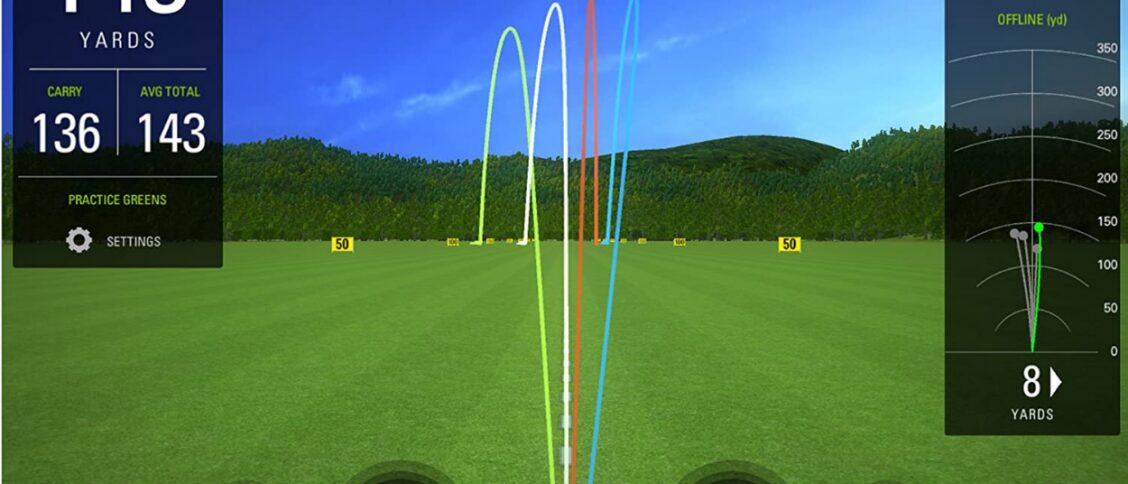
Golf simulators have revolutionized how players practice and enjoy the game, offering year-round accessibility regardless of weather conditions. These sophisticated systems combine cutting-edge technology with precise measurements to create an immersive golfing experience that rivals being on an actual course. Whether you’re a weekend warrior looking to improve your swing or a teaching professional seeking advanced analytics, understanding the golf simulator landscape is essential for making an informed investment.
What Is a Golf Simulator?
A golf simulator is a sophisticated system that allows players to practice or play virtual rounds of golf indoors. These systems typically include projection screens or monitors, specialized sensors (radar or camera-based), and advanced software that measures various aspects of your swing and ball flight with remarkable precision.
Modern golf simulators have evolved far beyond simple driving range alternatives. Today’s systems provide comprehensive data on every shot, from club path analysis to spin rates, allowing golfers to make data-driven improvements to their game. As technology has advanced, golf simulators have become increasingly accurate in measuring distance and other crucial metrics, with premium systems now matching or exceeding the precision of outdoor monitores de lançamento.
Leading Golf Simulator Brands
1. TrackMan
TrackMan stands as the industry gold standard, trusted by professional golfers and instructors worldwide. Their reputation for accuracy is unmatched, making them the preferred choice for tour professionals and elite training facilities.
Key Features:
- Dual radar technology for unprecedented accuracy
- Over 40 data parameters measured per shot
- Access to virtual replicas of world-famous courses
- Professional-grade analysis tools
- Real-time 3D trajectory mapping
- Comprehensive practice and play modes
Best For: Professional golfers, teaching professionals, and serious amateurs with substantial budgets who demand the absolute best data accuracy.
2. Foresight Sports
Known for their GC series, particularly the GCQuad and GC3, Foresight Sports has earned a reputation for delivering professional-grade accuracy in a more compact package. Their systems are widely used in both commercial facilities and high-end home setups.
Key Features:
- Highly accurate club and ball data measurements
- Portable design for both indoor and outdoor use
- Quadroscopic imaging technology (GCQuad) for enhanced accuracy
- Integration with popular golf software platforms including FSX software
- Minimal space requirements compared to radar systems
- Compatible with third-party software like TGC 2019
Best For: Serious golfers and professionals who want tour-level accuracy with greater flexibility in placement and space requirements.
3. Full Swing Golf
Full Swing has gained significant traction in recent years, particularly among PGA Tour professionals. Their simulators offer stunning visual quality and comprehensive performance metrics.
Key Features:
- Dual tracking technology combining cameras and infrared sensors
- Premium graphics and course simulation
- Advanced swing analysis with video playback
- Integration with professional instruction platforms
- Commercial-grade build quality
- Extensive course library
Best For: Golfers who prioritize visual experience alongside data accuracy, and those with dedicated simulator spaces.
4. SkyTrak
A popular mid-range option that delivers excellent value, SkyTrak has become the go-to choice for budget-conscious golfers who don’t want to sacrifice too much accuracy.
Key Features:
- Photometric technology for accurate measurements
- Compatibility with multiple software platforms
- Practice range and skills assessment modes
- Multiplayer options for entertainment
- Portable and easy to set up
- Regular software updates and improvements
Best For: Recreational golfers and improving players who want solid performance without the premium price tag.
5. Uneekor
Uneekor has emerged as a strong contender in the premium golf simulator market, offering exceptional accuracy and unique features at competitive price points.
Key Features:
- High-speed camera technology
- Accurate club and ball data
- Overhead mounting option for space optimization
- Excellent value in the premium category
- Growing course library
- Robust swing analysis tools
Best For: Golfers seeking premium performance with better value than TrackMan, especially those with ceiling height limitations.
Golf Simulator Comparison Table
| Brand | Price Range | Accuracy | Best Feature | Space Needed | Portabilidade |
|---|---|---|---|---|---|
| TrackMan | $20,000-$50,000+ | Excellent (1% margin) | 40+ data points | Large | Baixo |
| Foresight (GCQuad) | $12,000-$15,000 | Excellent (1-2% margin) | Quadroscopic imaging | Moderate | Alto |
| A todo vapor | $15,000-$60,000 | Excellent | Visual quality | Large | Baixo |
| SkyTrak | $2,000-$3,000 | Good (2-3% margin) | Value for money | Small | Alto |
| Uneekor (QED) | $8,000-$10,000 | Excellent | Overhead mounting | Moderate | Moderate |
Essential Features to Consider
Accuracy and Technology
Different systems use varying technologies to track your shots, and understanding these differences is crucial for selecting the right simulator for your needs.
Radar-Based Systems Radar technology, used by TrackMan, measures the entire ball flight from impact to landing. This provides exceptionally accurate data but requires more space and comes at a premium price. These systems excel at outdoor use and offer the most comprehensive ball flight data.
Camera-Based Systems Camera systems from manufacturers like Foresight, Uneekor, and SkyTrak capture data at impact and use algorithms to project ball flight. Modern high-speed cameras can capture thousands of frames per second, providing excellent accuracy with more flexible placement options.
Key Metrics to Evaluate:
- Ball speed accuracy – Critical for distance calculations
- Launch angle measurements – Affects trajectory and distance
- Spin rate calculations – Determines ball behavior and stopping power
- Club path analysis – Essential for swing improvement
While some tracking systems like Toptracer offer great accuracy for driving ranges, premium home simulators typically provide the most precise measurements for serious practice and game improvement.
Space Requirements
One of the most critical factors in simulator selection is ensuring you have adequate space. Insufficient room can affect both accuracy and safety.
Minimum Space Requirements:
| Dimension | Minimum | Recommended | Ideal |
|---|---|---|---|
| Ceiling Height | 8.5 feet | 9-10 feet | 10+ feet |
| Room Width | 10 feet | 12-15 feet | 15+ feet |
| Room Depth | 15 feet | 18-20 feet | 20+ feet |
| Hitting Area | 4×5 feet | 5×6 feet | 6×8 feet |
Important Considerations:
- Right-handed and left-handed golfers may require different configurations
- Driver swing requires more ceiling height than iron shots
- Consider space for seating and viewing area
- Factor in room for the projector or screen system
- Allow clearance for full backswing and follow-through
Software and Course Selection
The software ecosystem can make or break your simulator experience. Most modern simulators offer multiple software options, each with unique strengths.
Popular Software Platforms:
- E6 Connect – Extensive course library, strong multiplayer features
- TGC 2019/PGA Tour 2K21 – Gaming-focused experience with thousands of user-created courses
- GSPro – Highly realistic graphics and physics, growing course selection
- Creative Golf (TrackMan) – Professional-grade practice and play modes
- FSX (Foresight) – Comprehensive practice tools and beautiful course renderings
Many golfers invest in multiple software platforms to access different courses and practice modes, similar to how they might use various golf training aids for different aspects of their game.
Who Benefits from Golf Simulators?
Professional Golfers
Tour professionals and elite amateurs use simulators for year-round practice capability, detailed swing analysis, and course preparation. Many pros use simulators to prepare for tournament venues, studying hole layouts and testing different shot shapes before arriving at the course.
Key Benefits:
- Weather-independent practice
- Precise data for equipment testing
- Video analysis integration with coaching apps
- Tournament course familiarization
Teaching Professionals
Golf instructors have embraced simulators as essential teaching tools, offering enhanced instruction capabilities and detailed student feedback that would be impossible on a traditional range.
Key Benefits:
- Immediate feedback on swing changes
- Side-by-side comparison tools
- Weather-independent lessons
- Objective data to support instruction
- Video capture and analysis features
Recreational Golfers
Weekend warriors and casual players benefit from convenient practice options, game improvement tracking, and entertainment value. Simulators offer a social experience that can be enjoyed with friends and family year-round.
Key Benefits:
- Practice during winter months or inclement weather
- Track improvements over time
- Play famous courses from home
- Host golf parties and competitions
- Reduce time commitment compared to playing 18 holes
Families and Entertainment
Golf simulators have become popular entertainment options for families, offering engaging activities for golfers of all ages and skill levels. Combined with indoor putting greens, they create comprehensive home golf setups.
Integration with Other Golf Technology
Modern golf simulators don’t exist in isolation—they’re part of a broader ecosystem of golf technology designed to help you improve your game.
Compatible Technologies:
- Monitores de lançamento – Some portable units can integrate with simulator software
- Golf Watches – Upload simulator rounds to track overall statistics
- Analisadores de Swing – Complement simulator data with wearable sensors
- Golf Rangefinders – Practice distance control using real-world yardages
- Putting Analyzers – Add short game practice to your simulator setup
Many serious golfers create comprehensive practice stations by combining their simulator with other training tools, including net systems for outdoor hitting and specialized mats that provide realistic turf interaction.
Setting Up Your Golf Simulator
Location Selection
Choose a dedicated space that meets minimum requirements and won’t be needed for other purposes. Basements, garages, and spare rooms are popular choices. Consider factors like:
- Climate control for year-round comfort
- Proximity to living areas (noise considerations)
- Electrical requirements and outlets
- Flooring options and impact protection
- Ambient light control for projection quality
Installation Considerations
Professional installation is recommended for high-end systems to ensure proper calibration and optimal performance. Many retailers offer installation services as part of the purchase package.
DIY vs. Professional Installation:
- DIY can save $2,000-$5,000 but requires technical knowledge
- Professional installation ensures warranty compliance
- Calibration is critical for accuracy
- Electrical work may require licensed electrician
Ongoing Maintenance
Regular maintenance ensures consistent performance and longevity. Most systems require minimal upkeep, but attention to these areas pays dividends:
- Clean sensors and cameras monthly
- Update software regularly
- Inspect impact screen for wear
- Replace hitting mats as needed
- Recalibrate sensors annually or after moves
Frequently Asked Questions
How much does a quality golf simulator cost?
Golf simulator prices vary significantly based on technology, features, and brand reputation. Entry-level systems start around $2,000 for basic setups like SkyTrak with minimal enclosure. Mid-range options typically fall between $7,000 and $15,000, offering excellent accuracy and features for serious golfers. Professional-grade setups from TrackMan or Full Swing can exceed $50,000 when including premium enclosures, projectors, and installation.
Don’t forget to budget for additional costs beyond the launch monitor itself, including impact screens ($500-$3,000), projectors ($1,000-$5,000), hitting mats ($200-$1,000), software subscriptions ($500-$1,500 annually), and installation ($1,000-$5,000).
Can golf simulators improve my game?
Yes, golf simulators can significantly improve your game by providing instant feedback on swing mechanics, ball flight, and consistency. Research shows that golfers who practice regularly on simulators see measurable improvements in areas like:
- Consistent ball striking (15-20% improvement in dispersion)
- Distance control with irons (10-15% improvement)
- Understanding of swing dynamics
- Course management skills
- Mental game development through virtual rounds
The key is using the data effectively and incorporating structured practice, similar to working with golf fitness programs that target specific areas of weakness.
Quão precisos são os simuladores de golfe?
High-end golf simulators are extremely accurate, with margins of error as low as 1-2% for measurements like ball speed and direction. TrackMan and GCQuad systems are trusted by tour professionals precisely because of their accuracy.
However, accuracy varies by brand and model. Entry-level systems may have 3-5% margins of error, which is still useful for practice but may not provide tour-level precision. Factors affecting accuracy include proper calibration, lighting conditions, quality of hitting mat, and distance from ball to sensor.
Do I need special golf balls for simulators?
Most modern simulators work with regular golf balls, which is ideal for realistic practice. However, some considerations apply:
- Premium systems (TrackMan, Foresight, Uneekor) work with any golf balls
- Some budget systems may require specific balls or perform better with certain types
- Using the same balls you play on the course provides the most realistic practice
- Foam balls are available for safety in very tight spaces but sacrifice data accuracy
- Some golfers keep range balls specifically for simulator use to save money
Can I use my simulator outdoors?
While some simulators can be used outdoors, most are designed for indoor use. Portable units like SkyTrak, GCQuad, and certain Uneekor models work well outdoors and can be used as standalone launch monitors on the range or course.
Outdoor use considerations include lighting conditions affecting camera-based systems, weather factors impacting electronics, portability and setup time, and protection from elements when not in use. Many golfers use portable units both indoors with simulation software and outdoors for range practice, maximizing their investment’s versatility.
Conclusão
Investing in a golf simulator represents a commitment to improving your game and enjoying golf year-round. Whether you choose a premium system like TrackMan for tour-level data or a value option like SkyTrak for recreational practice, the key is selecting a simulator that matches your goals, space, and budget.
As technology continues to advance, simulators are becoming more accurate, more affordable, and more accessible to golfers of all levels. Combined with other modern golf technology tools and proper instruction, a golf simulator can transform your game and provide countless hours of entertainment.
Ready to take your game to the next level? Start by assessing your space, setting your budget, and testing different systems at local retailers or golf facilities. The investment in a quality golf simulator pays dividends through improved performance, year-round practice opportunities, and the pure enjoyment of playing the world’s greatest courses from the comfort of home.
For more guidance on complementary golf technology, check out our comprehensive guides on golf GPS devices, swing speed training, e home practice equipment.
This article was last updated on janeiro 19, 2026 .





 Portuguese
  English
  Japanese
  German